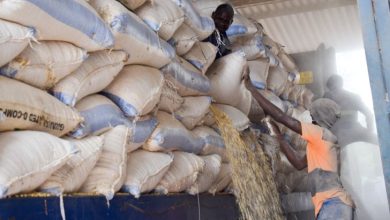
Persistent foreign exchange woes have reached crisis levels with reserves stuck below the recommended three-month cover, forcing Reserve Bank of Malawi (RBM) to tighten controls on the possession and movement of foreign currency.
RBM data for July 2026 show that total foreign exchange reserves fell to $600.6 million, equivalent of 2.4 months of import cover, against the internationally recommended minimum of three months.
In three notices published on September 18 2026 in the Malawi Government Gazette Supplement, an official publication of government notices, RBM Governor George Partridge announced that the new measures restrict the amount of foreign currency individuals can physically possess or take out of the country without permission while also limiting the amount of local currency travellers and cross-border traders can take or send abroad.
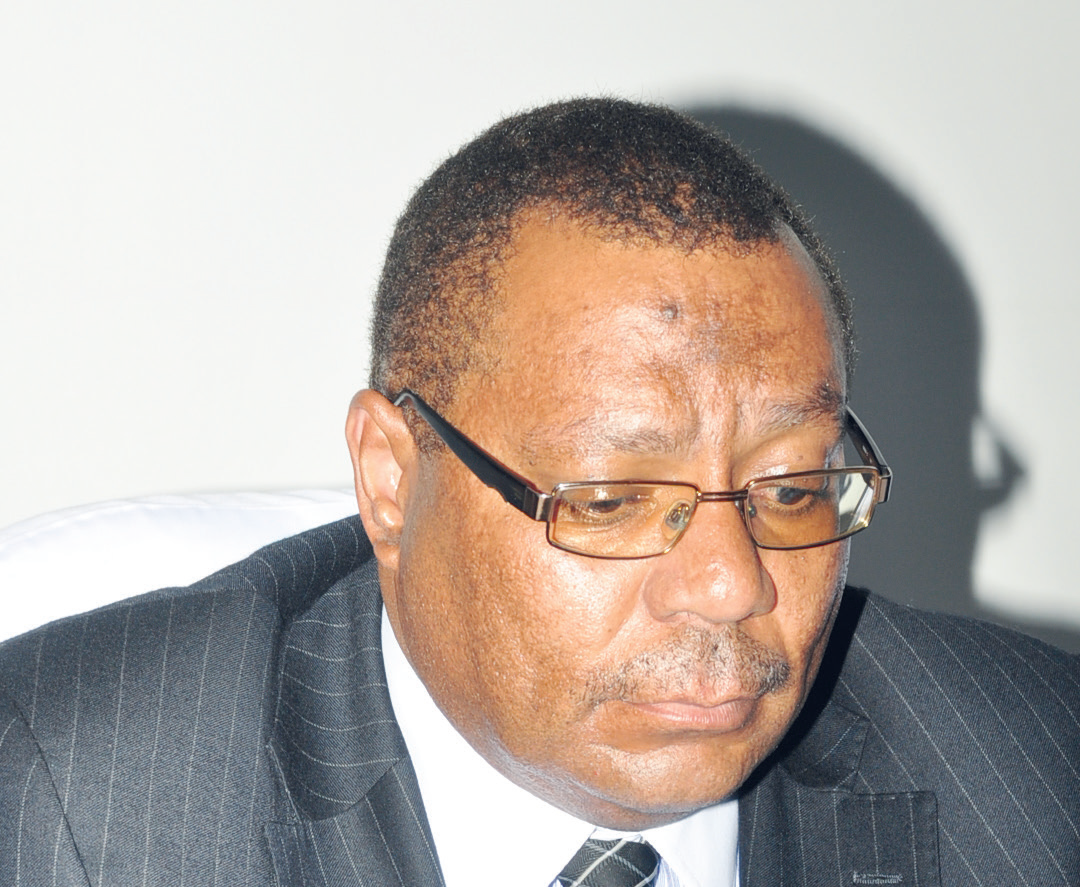
Under the Foreign Exchange (Limit on Physical Possession of Foreign Currency) Notice of 2026, no individual may physically possess foreign currency exceeding $1 000 or its equivalent in another currency without permission from the central bank.
“A person shall not, without the permission of the bank, physically possess foreign currency that exceeds a total sum of one thousand United States Dollars [$1 000] or the equivalent thereof, in any other foreign currency,” the notice states.
In the second notice, anyone taking or sending more than $1 000 in foreign currency outside Malawi must provide evidence that the money was sourced from an authorised dealer or obtain permission from RBM while the third notice limits the amount of Malawi kwacha to be taken or sent outside the country without RBM permission to the equivalent of $5 000 for cross-border traders and $100 for other travellers.
By press time at 9pm, RBM had not responded to The Nation’s request to explain what prompted the restrictions, how they will be enforced and whether the $1 000 possession limit applies to forex held at home, carried on one’s person or both.
Meanwhile, University of Malawi economics lecturer Edward Leman said the new controls could help RBM manage the limited foreign exchange available but would not, on their own, increase the country’s reserves.
He said Malawi was facing a double challenge of forex scarcity and growing informalisation of the limited foreign exchange available, meaning regulation alone could not correct the underlying imbalance between supply and demand.
“Ultimately, it is difficult to resolve structural economic problems through regulation alone. The controls may help manage the symptoms, but sustainable improvement requires policies that increase export earnings, attract foreign capital and investment, strengthen formal remittance channels and restore confidence in the formal foreign-exchange market,” said Leman.
Economic analyst Milward Tobias described the measures as a crisis-management intervention that should be temporary while authorities work to increase forex inflows.
“This measure is not really addressing the foreign exchange shortage, but it’s a measure to just help survive within the crisis,” he said.
Tobias, who previously served as Vice-President Saulos Chilima’s economics adviser and contested as an independent presidential candidate in the September 16 2025 General Election, likened the restrictions to rationing resources in a household facing scarcity, saying Malawi should use the period to tackle the underlying causes of the forex shortage.
He highlighted exports, foreign direct investment, remittances and development-partner support as key channels through which Malawi needs to increase foreign exchange inflows and rebuild its reserve position.
Cross-Border Traders Association of Malawi chairperson Steven Yohane, meanwhile, said the forex shortage was already forcing some traders to source it outside formal channels.
“We cannot access the forex in the formal channel, but most of the traders access forex through the black market,” he said.
RBM’s July 2026 Monthly Economic Review shows that total reserves declined from $616.1 million, equivalent to 2.5 months of imports, in June to $600.6 million, or 2.4 months, in July. The July position was also below the $607.7 million, equivalent to 2.4 months of imports, recorded in July 2025.
RBM attributed the month-on-month deterioration mainly to a decline in estimated private-sector reserves, although gross official reserves improved slightly.